An ordering experience workshops actually enjoy
Workshops don't want to learn another platform. If ordering isn't faster than a phone call, mechanics won't bother.






Everything starts in one search bar
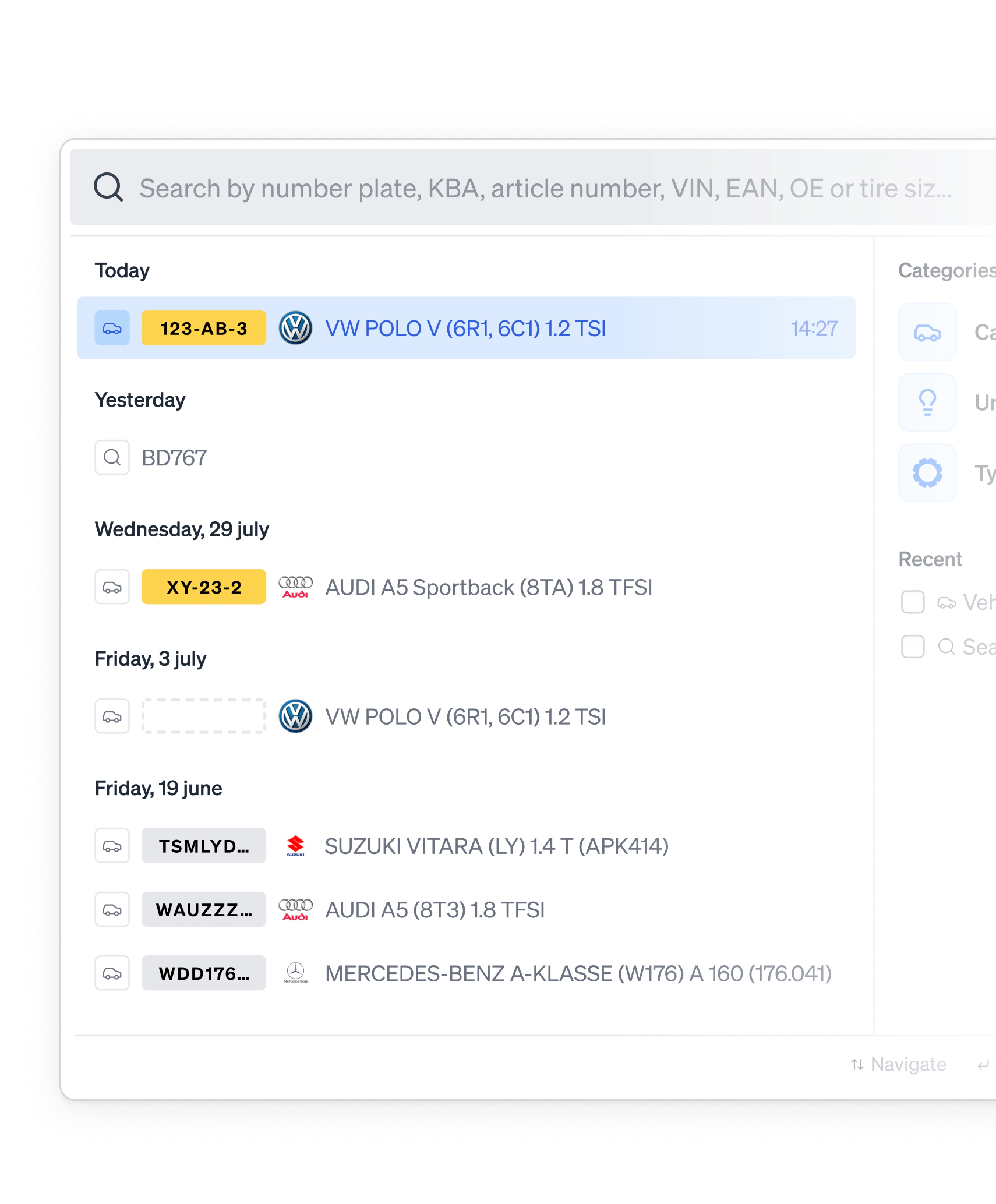
One search bar, and it takes anything: a number plate, a VIN, a part or OE number, a tyre size or plain words. Nothing to choose first and nothing to learn, so a mechanic types what's in front of them and gets on with the job.
Fast, and built that way from day one
Speed was a design decision from the first line of code: the servers, the data and what the screen shows while it waits. The chart measures one page, but the feeling is on all of them. Hard to put in words, easy to show in a demo.
Time to a usable page
DOMContentLoaded on each catalogue's homepage with an empty browser cache, August 2026. A longer bar is a faster page
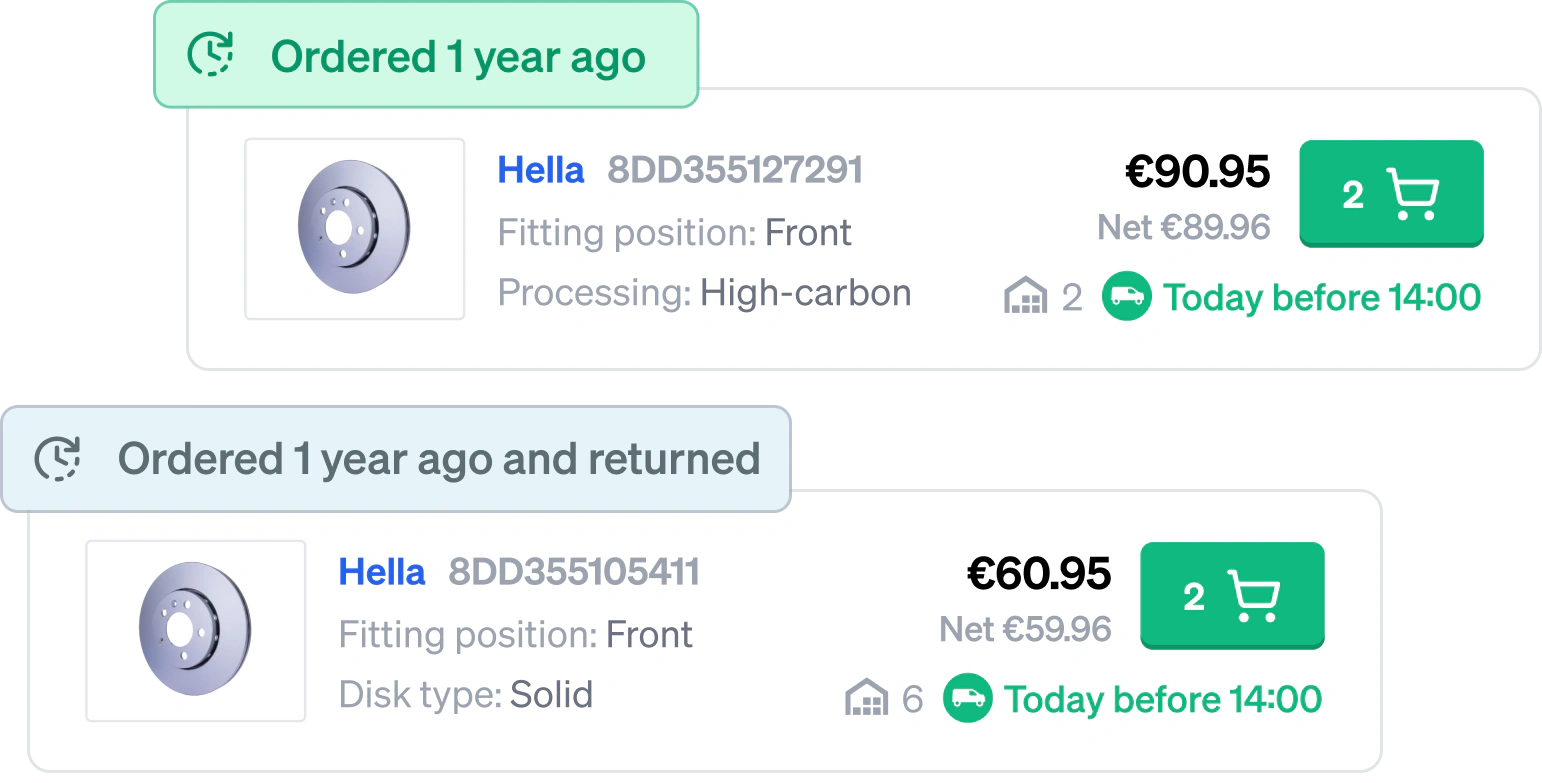
The part that fit this car last time
A green label marks a part this workshop ordered for this car and never sent back: it went in, so it fits, and it's the brand they chose. Next time the brake discs are due, that's the one to pick. Grey means the last one came back.
One list of recent cars for the whole workshop
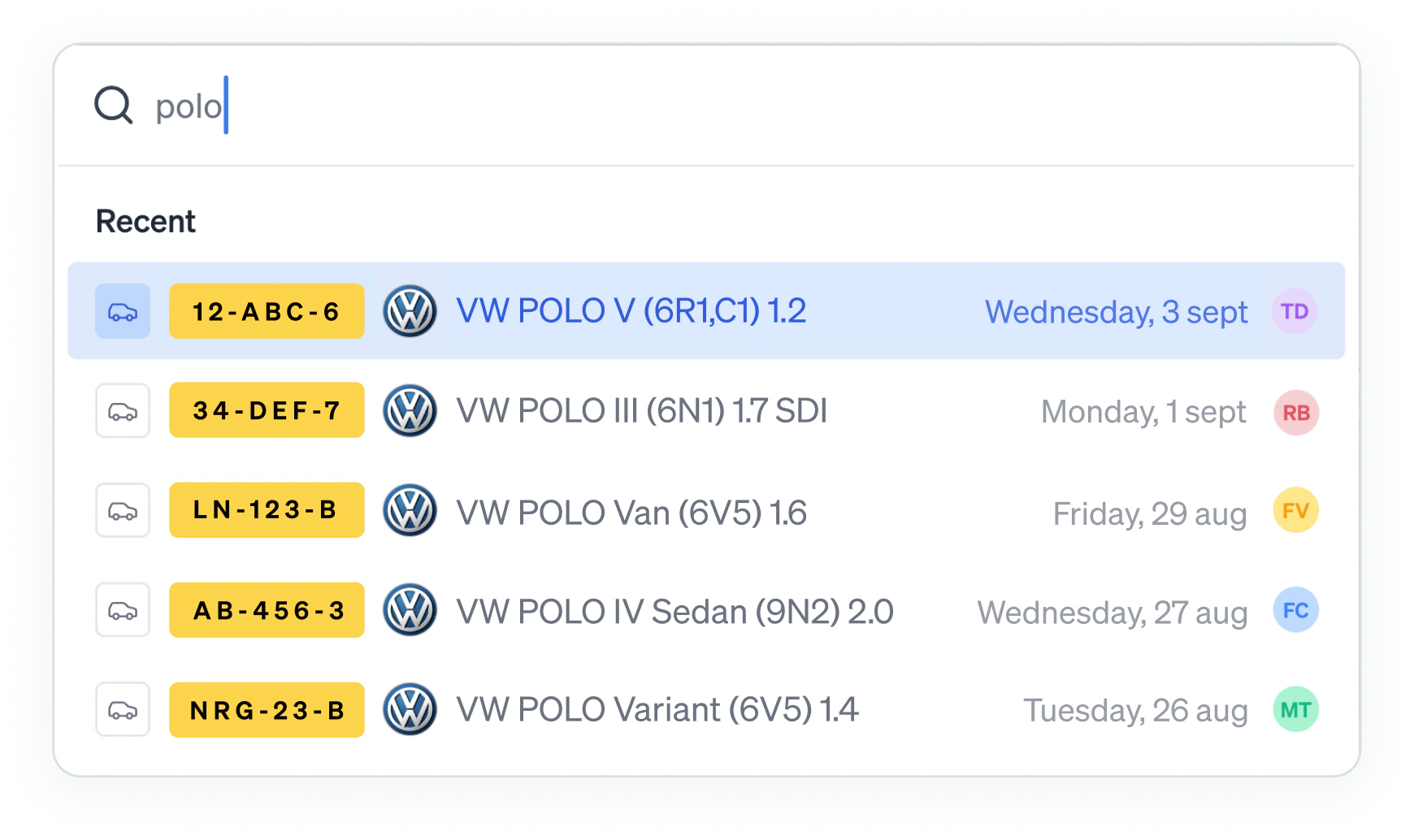
Every car a workshop looks up or orders for goes on one list, shared by everyone who logs in there. Your staff see it too, so a phone call starts with the car they had open. And the search bar knows it: type "polo" and their Polos come up first.
We make one thing and nothing else. Just speed, craft and the hundred small things a mechanic never has to notice.
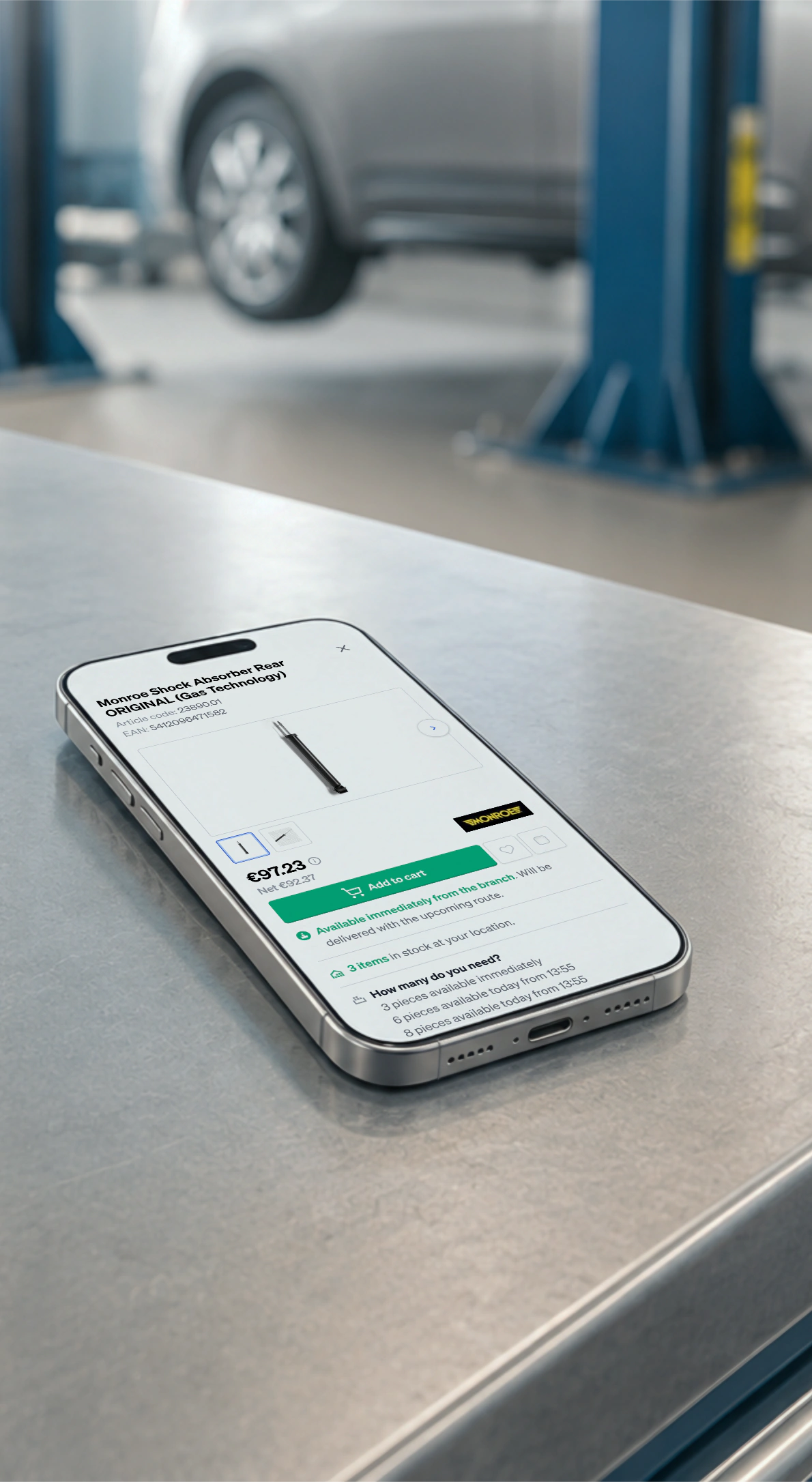
30%
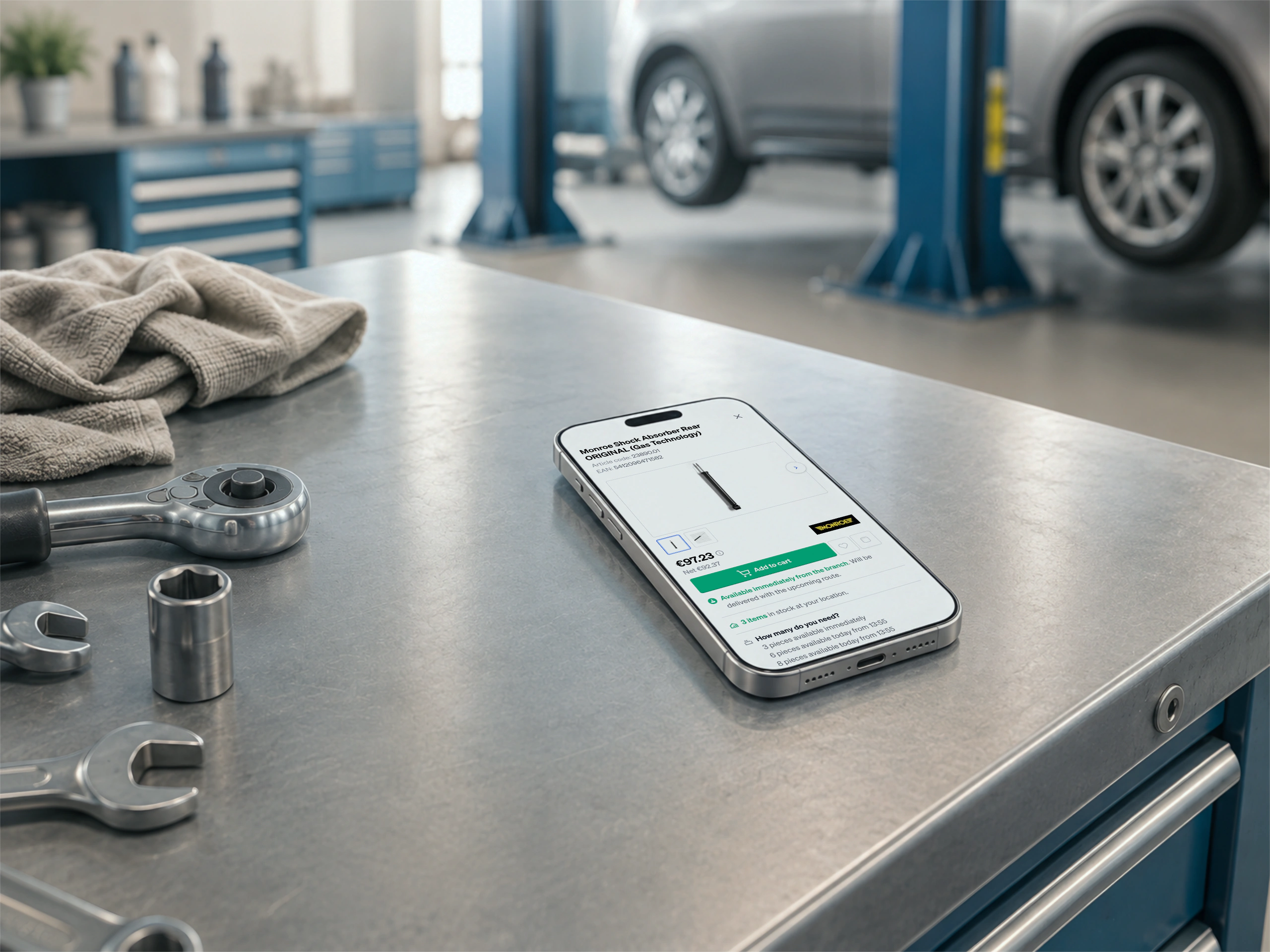
Of users also work on mobile, over 40% at some wholesalers. We have designed for it since day one.
A cart built around a busy workshop
Diagnose the car first, order later, three cars at once: the cart keeps up.
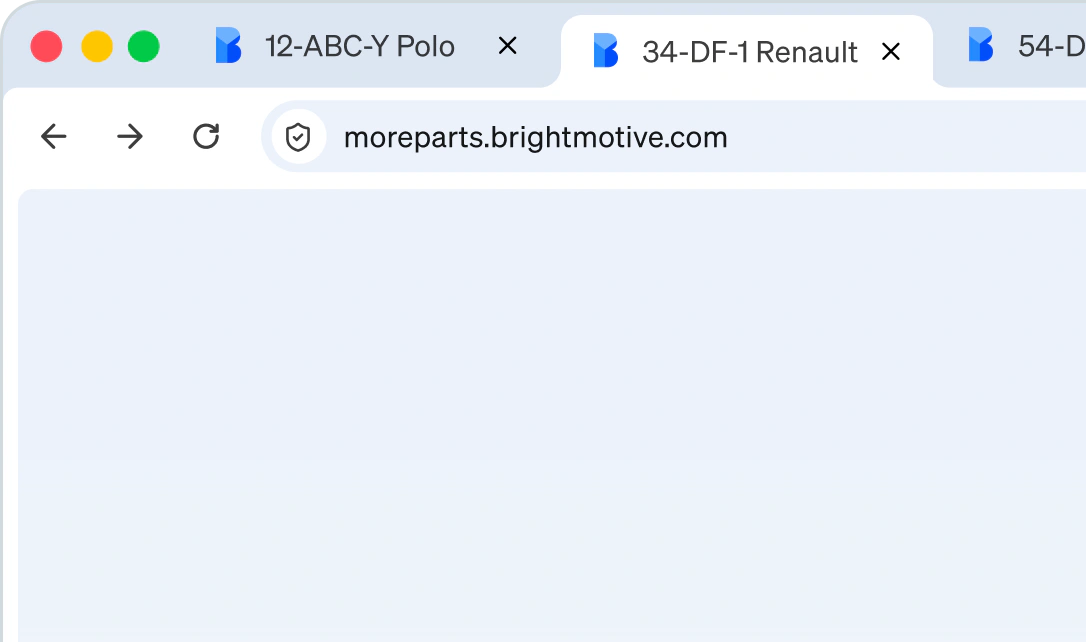
Multiple carts
Each browser tab has its own cart, with the licence plate shown per tab. A workshop handling three cars at once keeps three orders running without mixing them up.
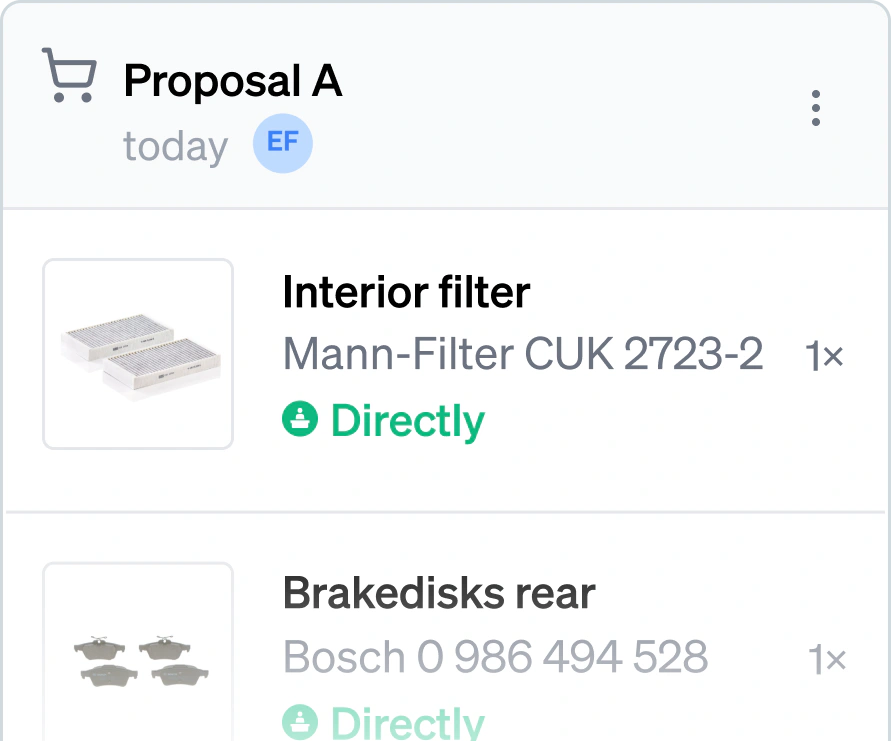
Save for later
Workshops save what they need and come back when they're ready. It fits how they actually work: diagnose the car first, order the parts later.
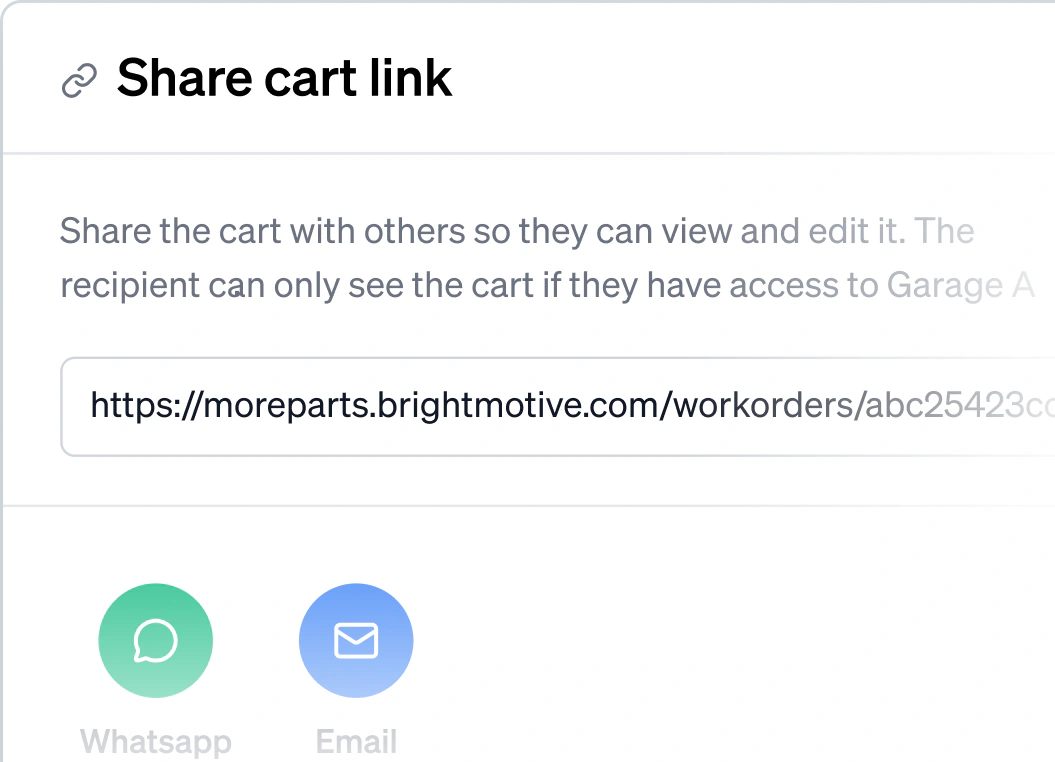
Share a cart
A saved cart travels as a link to a colleague or another branch, so the parts one person picked are the parts the next one orders.
Barcode scanning
Point a phone camera or a plugged-in hand scanner at a barcode and the matching product appears instantly.
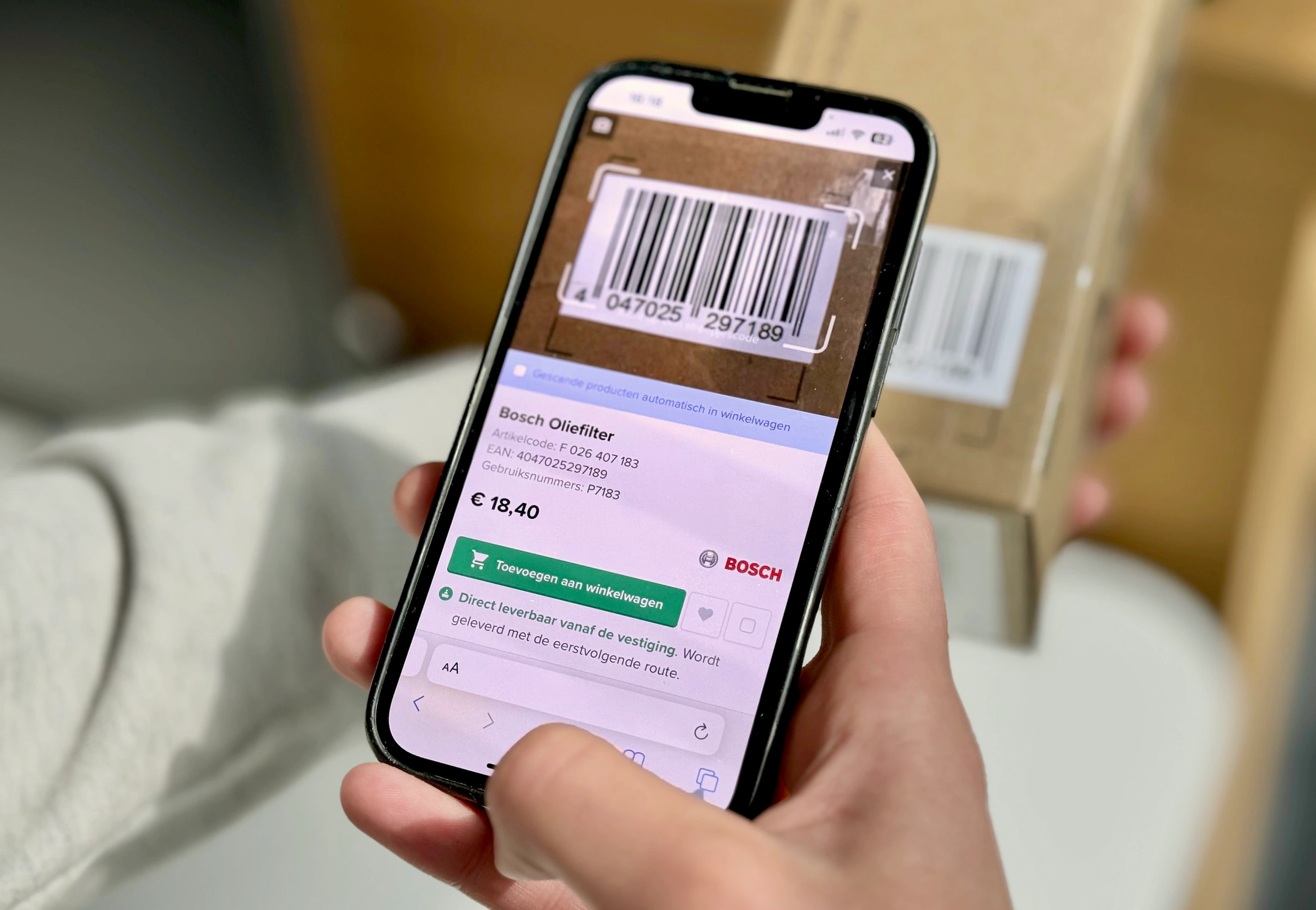
Scan the shelf
Restocking becomes scan each box, place one order. Tick automatic adding and every part the camera reads lands in the cart by itself.
Scan a return
Scan the part that came back and its product page opens with the original order already found, so the return takes a few taps.
VIN numbers
With a plugged-in hand scanner, the label on the door pillar opens the car: seventeen characters nobody has to type.
Nothing to install
On a phone the camera is the scanner, and a hand scanner works the moment it is plugged in. No app, no driver, no setting to find first.
An experience your staff enjoy too
Your staff see what the workshop sees: the same cart, the same prices, the same history, with a few extra controls on your side.
Switch into a workshop
Your staff open any workshop and see what it sees: its prices, delivery times, history and cart. Switch at any point, halfway through an order included.
The car they just opened
Switch into a workshop and their recent vehicles are on screen, newest first. The car they had open when they rang is the top line.
Who ordered for this car
Open a car before picking a workshop and it lists every workshop that has ordered for it, so you know who to switch into.
Adjust a price in the cart
Staff with the permission are able to edit a line's net price right in the cart. The workshop sees the new price straight away and orders at it.
Freeze the prices
Save a cart for a workshop with its prices frozen and it waits among their saved carts. What you quoted is what they pay, days later included.
Favourites
The parts a workshop orders most, one tap away. They add their own, and your staff can add a few for a workshop that is just getting started.
Internal notes
One internal note per workshop. Any colleague who switches in sees it straight away, whoever wrote it. The workshop itself never does.
A history on every line
Every order remembers who added each line, who changed the quantity and who applied a special price, so nobody has to ask around.
Give your workshops a catalogue they trust
They find the right part on the first try and see when it actually arrives. Fewer phone calls for your counter team.